AI Search
AI SEO Website Development: How to Build Websites for AI Search in 2026
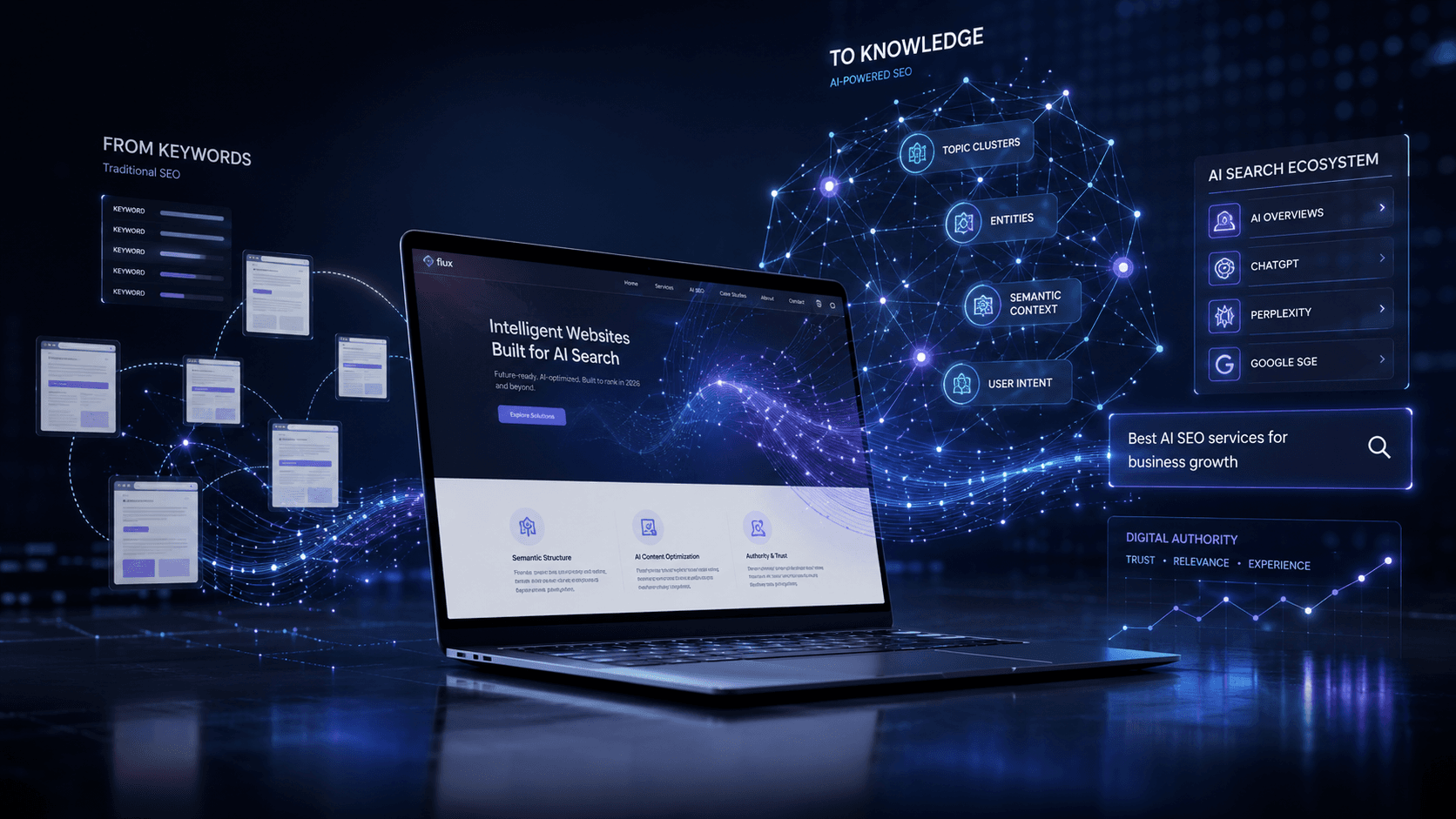
We stopped building websites only for Google. We started building them for AI.
For years, website development and SEO followed a predictable formula: find keywords, optimize pages, improve technical performance, build backlinks, track rankings, and repeat.
That approach worked because search engines mainly focused on matching keywords with relevant pages. But search is changing.
In 2026, businesses are discovering something important: a website can rank well on Google and still fail to appear in AI-powered search experiences.
The problem is not always poor SEO. Often, the problem is that the website was built to be found, but not understood.
Modern website development is shifting from keyword optimization toward AI search optimization, where websites must help both humans and intelligent systems understand what a business does, who it helps, what expertise it provides, and why it should be trusted.
The future of SEO is not just about rankings. It is about becoming the most understandable and trustworthy source of information.
Search Is No Longer Only About Rankings
Traditional SEO focused on improving visibility through signals such as keywords, meta titles, content optimization, backlinks, page speed, technical SEO, and structured data.
These fundamentals remain important. However, AI-powered search engines and answer engines are adding another layer of evaluation.
Modern search systems are becoming better at understanding context, relationships between topics, brand expertise, customer intent, real-world experience, and trust signals.
The old question: Can search engines find this website?
The new question: Can search engines and AI systems understand why this website deserves to be recommended?
This is the foundation of AI SEO website development and the connected discovery model explained in AI Discovery.
What Is AI SEO Website Development?
AI SEO website development is the process of designing websites that are optimized not only for traditional search engines but also for AI-powered search platforms.
It combines traditional SEO, semantic SEO, content architecture, structured data, user experience, entity optimization, and Generative Engine Optimization (GEO).
The goal is simple: create websites that AI systems can accurately understand, summarize, and recommend.
The Website Project That Changed How We Think About SEO
A few months ago, we reviewed a website project for a growing digital services company.
At first glance, everything looked successful. The website had modern design, fast loading speed, strong Core Web Vitals, clear navigation, service pages, and keyword-focused content.
From a traditional SEO perspective, it looked complete.
But we asked a different question: if someone asked an AI assistant to recommend this company, would the website provide enough information to explain what they do, who they serve, and why they are different?
That question changed our approach. AI visibility is not created by simply adding more content. It comes from creating connected, meaningful information.
Ranking Does Not Always Mean Being Understood
Google rankings and AI search visibility overlap, but they are not identical.
Traditional SEO evaluates signals like relevance, authority, links, content quality, and technical performance.
AI search adds another dimension: understanding.
AI systems attempt to identify how topics connect, whether a company demonstrates expertise, whether content solves real problems, and whether information creates a complete picture.
A website is no longer just a collection of pages. It is becoming a digital knowledge system representing a business.
The companies that communicate clearly will have a stronger advantage in AI-powered search.
How AI Search Optimization Changed Our Website Development Process
The biggest change was simple: we stopped starting projects with keyword lists. We started with customer questions.
Questions like: What problems does this business solve? What questions do customers ask before purchasing? What information helps customers make decisions? Which topics demonstrate expertise? How should website pages connect together?
These questions influence website architecture, content strategy, internal linking, schema implementation, and user experience.
SEO became less about inserting keywords. It became about building understanding.
Website Architecture Matters More Than Individual Pages
One of the biggest mistakes businesses make is creating isolated pages.
A service page is created. A blog post is published. A location page is added. But the website never develops a connected structure.
For AI systems, this creates confusion.
Think about a book. If every page exists without a title, chapters, or structure, the information becomes harder to understand.
Modern websites need to function like organized knowledge systems.
Core Service Pages
Pages explaining exactly what the business offers.
Supporting Educational Content
Articles answering customer questions.
Industry Resources
Content showing industry expertise.
Customer Guides
Information helping users make decisions.
Strategic Internal Links
Turn insight into action
See where your growth system is losing opportunities.
Measure discovery, customer progression, revenue visibility, automation, and AI readiness in one structured assessment.
Start your assessment →Connections between related topics. Every page should strengthen another page.
The broader Operating Intelligence framework shows how discovery, conversion, automation, and business data can work as one connected system.
We Changed the Question From Keywords to Customer Problems
The old SEO question: What keyword should this page rank for?
The new AI SEO question: What problem should this page solve better than anyone else?
Customers do not search because they want keywords. They search because they have problems.
Someone searching for “SEO agency near me” may actually be asking: Why is my website not generating leads? How can I improve online visibility? How can my business compete digitally? What SEO strategy will actually work?
The best websites answer the question behind the search.
Technical SEO Still Matters, But It Is Only the Foundation
AI SEO does not replace technical SEO. Technical foundations remain critical.
An AI-friendly website still needs fast performance, mobile optimization, clean website structure, schema markup, accessibility, secure architecture, and proper indexing.
However, technical optimization alone does not create authority. A perfectly optimized website with shallow information is still a weak resource.
Technical SEO helps AI systems access your website. Quality content helps them understand it.
What Makes a Website AI-Friendly?
Successful AI-friendly websites usually share common characteristics.
They Answer Questions Clearly
They explain concepts instead of repeating keywords.
They Build Topic Relationships
Related content connects together to create expertise.
They Demonstrate Experience
They include examples, case studies, opinions, and practical solutions.
They Use Semantic SEO
They cover topics completely instead of focusing on one keyword.
They Create Trust
They clearly communicate who they are, what they do, and why customers choose them.
Generative Engine Optimization (GEO): The Future Layer of SEO
Traditional SEO helps websites appear in search results.
Generative Engine Optimization helps websites become sources that AI systems reference and recommend.
GEO focuses on clear answers, strong expertise signals, structured information, entity recognition, and reliable content.
As AI search grows, GEO will become an important part of digital marketing strategies. Our AI Search Visibility Guide explains how this affects service businesses across ChatGPT, Gemini, and Google.
AI SEO and Traditional SEO Work Together
AI search will not eliminate SEO. SEO is evolving.
The fundamentals remain: helpful content, technical excellence, brand authority, user experience, and trust.
The difference is that search engines are moving beyond matching words. They are trying to understand meaning.
The future belongs to websites that explain, educate, demonstrate expertise, and build confidence.
The Future of Website Development Is About Being Understood
The biggest lesson is strategic.
Websites should no longer be treated as collections of pages built only for rankings. They should be built as digital knowledge systems.
A successful website in the AI era must help people understand information, help search engines recognize expertise, and help AI systems confidently recommend the right businesses.
The future of SEO is not Google versus AI. The future is creating digital experiences that both humans and intelligent systems can understand.
And that starts before the first page is published.
Key Takeaways
AI search visibility requires more than keyword optimization.
Websites need strong architecture, not isolated pages.
Search engines increasingly evaluate meaning and context.
Technical SEO remains essential but requires valuable content.
AI-friendly websites are built around customer questions.
Businesses that clearly demonstrate expertise will have an advantage in AI-powered search.
If you want to see what intelligent systems currently understand about your business, the Business Intelligence Audit identifies gaps in discovery, structure, trust, and customer progression.
Frequently Asked Questions
What is AI SEO?
AI SEO is the practice of optimizing websites so AI-powered search systems can better understand, summarize, and recommend their information.
How is AI SEO different from traditional SEO?
Traditional SEO focuses mainly on rankings. AI SEO focuses on understanding, context, expertise, and information relationships.
What makes a website AI-friendly?
AI-friendly websites have clear architecture, helpful content, structured data, strong internal linking, and demonstrated expertise.
Does traditional SEO still matter in AI search?
Yes. Technical SEO, backlinks, and content quality remain important foundations for AI search visibility.
What is Generative Engine Optimization (GEO)?
GEO is the process of optimizing content so generative AI systems can understand and reference a business or website.
About the Author
Gagan Deep is the founder of Flux Media Creations, an operating intelligence company that helps service businesses build connected digital systems that are understandable to customers, search engines, and AI platforms.
Related Posts
Continue exploring
Article resources
Table of contents
Recent posts
Services we offer
Categories